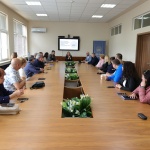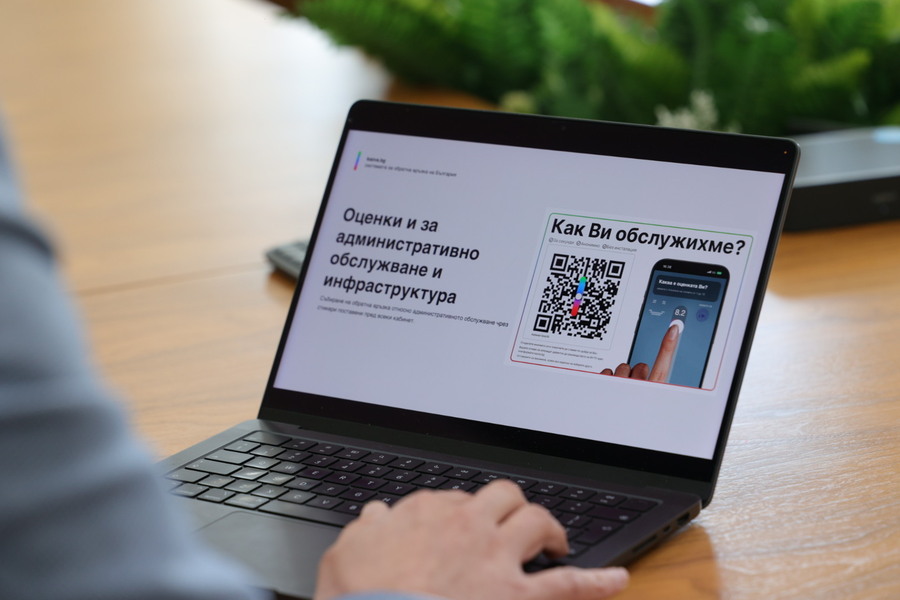
The University of Telecommunications and Post introduces the Kazva.bg feedback system, with which students will be able to assess the learning process, infrastructure and work of the university administration in real time. The official presentation of the platform to the academic staff of the UTP took place in the meeting room of the university today. Kazva.bg is the Bulgarian feedback system, a market leader with nearly 2 million collected and analyzed opinions of about half a million Bulgarian citizens.
“We hope that with this pilot project in the UTP we will be able to provide our students with quick feedback – not only for teachers, but also for the administration. Our goal with the start of this project is to improve the service to the students at our university and to increase the quality of the training”, said during the meeting the Rector of the University Prof. Dr. Miglena Temelkova.
Vladimir Ognianov and Radoslav Raykov presented the platform’s capabilities and explained its functionalities to the university’s lecturers. “Our team is extremely satisfied with the scope, scale and objectives of the project, which have been invested in our work with the University of Telecommunications and Posts. The idea is to have a new way for students to share their opinion quickly, conveniently and constructively,” Mr. Raykov told the audience.
The system is used by large companies such as bTV Media Group, Borika AD and an increasing number of municipal administrations. Through Kazva.bg, citizens can give quick and easy feedback on the quality of service, infrastructure and a wide range of topics concerning private business and public institutions. The platform has already analyzed multiple assessments, providing organizations with accurate data on where their processes are satisfying and where they need improvement.
The University of Telecommunications and Posts will use Kazva.bg to give students the opportunity to evaluate each lecture and the learning process. The partnership provides a transparent mechanism for two-way communication between students and the university and creates the basis for gradual, measurable improvements in the educational and administrative environment. The collected information will be visualized only for the academic management, which will be able to react quickly and reasonably to specific signals.